Progressive Game Blog – May 4, 2013: The Fifth Inning


For the last five years, members of the United Cardinal Bloggers participate in a progressive game blog, with each writer sharing their perspectives on an inning of a game.  This year, we will look at a Saturday afternoon game between the Cardinals and Brewers from May 4.

We take over from our friend, Bill Ivie  at I70-baseball , as the game moves into the fifth inning.    As expected, this has turned into something of a pitchers duel, and the innings are starting to move by rather quickly.  Both starters struggled in the early going, Adam Wainwright in the first inning and Yovani Gallardo moments later in the second.  A three run homer by Jon Jay and two run shot by Jean Segura account for all of the runs in the game.  So far.

Both teams will be turning over the lineup card in this inning.  Due up for the Cardinals in the top of the inning are Pete Kozma, Adam Wainwright and Matt Carpenter.

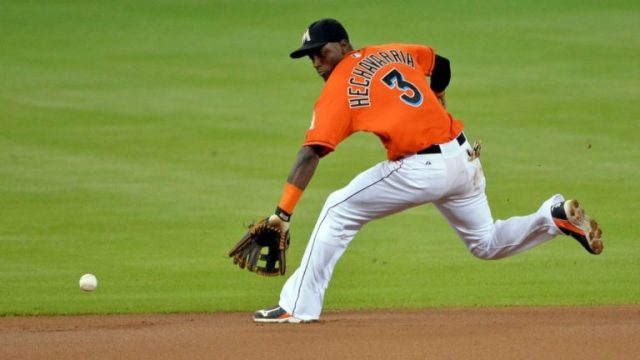
Pete Kozma (0-1, ground out) swings at the first pitch and grounds out.

Adam Wainwright (0-1, strike out), currently second in career home runs among active players (6), works the count on Gallardo, but eventually flies out harmlessly to center field.

That brings Matt Carpenter (0-2, fly out, line out) to the plate.  After throwing curve balls for strikes, and fastballs just off the plate, Gallardo strikes out Carpenter looking with a fastball right at the knees.

Yovani Gallardo ends the inning at 69 pitches.

Coming up to bat for the Brewers, Yovani Gallardo, Norichika Aoki and Jean Segura.  If anybody gets on, Ryan Braun.

Gallardo (0-1, fly out) is the current home run leader among active pitchers (12), but does not add to that total as Wainwright strikes him out looking with one of his trademark curveballs.  In the shadows from the late afternoon sun, that was an exceptionally nasty pitch.

Norichika Aoki (1-1, single, hbp, run) slaps a single to center, Ichiro style.  For the Brewers, that would be the first hit since the first inning.

Jean Segura (1-2, home run, double play) smokes a single up the middle, with Aoki taking second base on the play.

With the tying run now in scoring position, Ryan Braun (0-2, strikeout, ground out) steps up to the plate. Braun works the count full, and then Wainwright throws a 93 mph fastball right past the Brewers slugger for a strikeout.  He is now one pitch away from getting out of this jam.

Make that two pitches, as Yuniesky Betancourt (1-2, single, fly out) hits Wainwright’s second pitch, his 78th of the game, up the middle and Pete Kozma easily makes the play, throwing Betancourt out to end the inning.

The inning ends with the Cardinals leading Milwaukee, 3-2.  For the sixth inning, we hand control over to Wes Keane at Keene on MLB.  But before we do, it is worth looking back at that first inning and the play Pete Kozma made to end it.  As the innings go by, that play becomes more and more significant.

Posted in 2013 Season, United Cardinals Bloggers | 3 Comments

Birds Eye View: April 22-24 – St. Louis Cardinals at Washington Nationals


The St. Louis Cardinals (10-8, 1/2 game back)  conclude their East Coast road trip with a three games series against the Washington Nationals (10-8, 3 games back).  The last time these two teams met was in the 2012 National League Divisional Series, with the Cardinals coming from behind to win a thrilling game five.   The Cardinals hope to repeat some of that magic while the Nationals want to show that was just a step in the development of  a perennial contender.

How they got here

After losing their opening series in Arizona, the Cardinals won their next three series (San Francisco, Cincinnati and Milwaukee) and then split the last two, including a fortunate rainout in Pittsburgh.  The Cardinals are winning on the strength of their starting pitching and timely, if inconsistent, hitting.   In fact, the starters have been so good, and the Cardinals ability to hit with runners in scoring position so frequent that neither of these is really sustainable.   It has been fun to watch, but not a good indicator of what to expect each game.

Fortunately, there is another aspect of the Cardinals game which is not expected to continue, and that is the lack of success in the bullpen.  Manager, Mike Matheny, continues to have trouble finding the magic sequence of relievers in the absence of  closer, Jason Motte, leading many to speculate about a trade or possible minor league promotion.

Washington enters this series feasting on weaker teams (Miami and Chicago White Sox) while struggling with teams at the top of the division (Atlanta, New York Mets, Cincinnati).  Starting pitching has been something of a tale of extremes as well, either being very good (Ross Detwiler, Jordan Zimmermann, Stephen Strasburg) or quite the opposite (Dan Haren, Gio Gonzalez).

Rafael Soriano

Rafael Soriano

As with the Cardinals, the Nationals bullpen has been inconsistent. Over the winter, Washington added some depth by signing former Yankees and Rays closer, Rafael Soriano.  That move allows manager, Davey Johnson, to use both Tyler Clippard and Drew Storen in the important setup role, giving them a very formidable late inning bullpen.  Unfortunately, all three have struggled so far this season.    The Nationals bullpen is also heavily biased to the right side, having only one left handed reliever, Zach Duke.  That is somewhat offset by having a pair of lefties in the starting rotation, but does play into the strength of the Cardinals bench in the late innings.

Unlike the Cardinals, the heart of the Washington batting order is getting it done, with Bryce Harper leading the charge (.369 / .31 / .738, 3 doubles, 7 home runs, 14 RBIs).  If there is a weakness, some of the big Washington bats can be prone to strike out, and the Cardinals pitchers are 4th in the NL in strikeouts.  Washington will face the top 3 strikeout pitchers in Shelby Miller, Adam Wainwright and Jaime Garcia.

On paper, this matchup should favor the Cardinals, just slightly.  We have learned that games are actually played on the field and not on paper, so anything can happen.  There are some intriguing matchups that should make for a very exciting series.  Both teams expect to see post-season play, so this could be a precursor to another interesting playoff series.

Probable Pitchers

Monday, April 22 – 6:05pm CDT

Shelby Miller (2-1, 1.96 ERA) vs Dan Haren (1-2, 8.10 ERA)

Could we ask for a better matchup to start this series ?

Former Cardinals prospect, Dan Haren, looks to turn around a rough start to his 2013 season.  He has not made it past the fifth inning in any of his previous three starts.  Haren has been around the plate, but not fooling opposing hitters, who are averaging 2 hits per inning.  Carlos Beltran and Yadier Molina have hit Haren in the past, and 2 of Matt Holliday’s six hits have left the ballpark.

Shelby Miller has been impressive so far in his rookie season.  He has shown an impressive fastball with late movement.  His curveball is much improved and has gotten him out of a few early season jams.

TV: Fox Sports Midwest, MLB.tv (out of market)

Tuesday, April 23 – 6:05pm CDT

Adam Wainwright (3-1. 2.48 ERA) vs Ross Detwiler (1-0. 0.90 ERA)

For the Cardinals, Adam Wainwright is looking every bit like the pre-Tommy John Cy Young candidate we saw in 2009 and 2010, and them some.  The velocity has returned to his fastball, and he is able to get his cutter over for strikes.  Do we even have to mention the curveball ?

On the other side of the diamond, St. Louis native, Ross Detwiler has been exceptional.  He should be 3-0 on the season, with his bullpen costing him a pair of wins.  The big lefty should easily handle the left side of the Cardinals batting order.   The Cardinals have gotten exactly two extra base hits off Detwiler in his brief career.

This has the makings of a 2-1 game, played in under two hours.  Which means that it will be another of those 10-8 slugfests that goes on well into the night.

TV: Fox Sports Midwest, MLB Network, MLB.tv (out of market)

Wednesday, April 24 – 12:05pm CDT

Jaime Garcia (1-1, 3.22 ERA) vs Stephen Strasburg (1-3, 2.96 ERA)

After a brilliant start to the season (7IP, 3h, no runs), Strasburg has run into a bit of trouble.  Pitch count has forced an early exit in his last three starts (all losses), and he has been hit hard, giving up 3 home runs in his last two.  He is still Stephen Strasburg and capable of going out there and throwing a 2 or 3 hitter, so Cardinals batters need to be patient.  Strasburg has only allowed two hits to players on the current roster, both to Matt Holliday.

Garcia has been the exact opposite of Strasburg, pitching brilliantly in three of his four starts.  The last, well, the less we talk about it, the better.  Garcia has had trouble in Washington, and tends to pitch better at night than during the day.  Not a good combination.   To make matters a bit worse, the current roster of Nationals looks like Murderer’s Row against Garcia.

This could be a very interesting and entertaining game.

TV: Fox Sports Midwest, MLB Network, MLB.tv (out of market)

Who’s Hot

Bryce Harper is on fire.  Whether you like him or not, you have to marvel at the start of his sophomore season.  He is hitting for average and power, and doing so consistently.  Jaime Garcia has held him in check, but he has torched Adam Wainwright.  But that was last year, this is a different Adam Wainwright.  That game two matchup should be the highlight of the series.

In limited action, young slugger Matt Adams is dwarfing Harpers’s numbers with a slash line of .542 /  .593 / 1.043.  And no, that last number is not an OPS (on base percentage plus slugging), that is his actual slugging percentage.  Those ridiculous numbers beg the question – why is he not getting more playing time ?   The answer is simple, Carlos Beltran is heating up and while struggling, Allen Craig is still delivering with men on base.

Yadier Molina is the only consistent bat in the Cardinals lineup, going 9-20 on this road trip (.450).

Carlos Beltran is beginning to overcome a slow start to the 2013 season.  His batting average is rising and the power is coming back.  He hit 3 home runs in Philadelphia, giving him 4 on the season.

The entire Cardinals starting rotation.  Blistering hot.  The rain washed away one bad outing by Jake Westbrook, and he turned that one around in his next start.  Jaime Garcia was not as fortunate in Philadelphia, but has only had the one bad outing.

Who’s Not

Either bullpen.  Rafael Soriano is 6 for 7 in save opportunities, but has been hit hard to start the season.  He is beginning to settle down, which is a good thing for the Nationals.   Edward Mujica is the lone bright spot in an otherwise inconsistent Cardinals bullpen.  Mike Matheny continues to scramble,  hoping to find a closer.

Matt Holliday – even though he leads the team with 12 RBIs, his .246 / .368 / .421 slash line has to improve if the Cardinals hope to keep pace with the Reds in the NL Central.  We know that Holliday is a slow starter to the season, so we should see him heating up in the coming weeks.   At least, for now, he is getting clutch hits with runners in scoring position.

Allen Craig is the same story, able to get key hits to drive in runs, but little else.

Jon Jay is having a brutal start to the season, hitting only .208.  If that does not improve, expect to see Shane Robinson getting more starts in center field.

Daniel Descalso is hitting below the Mendoza line, at .182.

Danny Espinoza is also under the Mendoza line, hitting just .170.  That could open the door for Steve Lombardozzi, who has been good in limited playing time.

Ryan Zimmerman (on the disabled list) – a .670 OPS is not cutting it for a player they expect to drive in 100 runs or more.  Right now, he has more strikeouts (14) than base hits (12).  He has hit Adam Wainwright and Fernando Salas in the past, but the rest of the Cardinals pitchers have handled him with ease.

Injuries

The Cardinals currently have three players on the disabled list: Chris Carpenter(p), Rafael Furcal(ss) and Jason Motte(p).  Two of the three are out for the season, with no timetable on the return of Motte.

The Nationals also have three players on the disabled list: Christian Garcia(p), Ryan Zimmerman(3b) and Wilson Ramos(c).   Only Garcia is eligible to be activated, but he has just started his throwing program and is not expected to be back until next month.

Bob Netherton  is a member of the Baseball Bloggers Alliance and United Cardinal Bloggers. His work can be found at On the Outside Corner, a mostly historical blog about the St. Louis Cardinals.  You can also find Bob on Twitter at @CardinalTales.

Posted in 2012 Season | 2 Comments

2012 United Cardinal Bloggers Award Ballot


As we look to close out the 2012 season, the United Cardinal Bloggers have one more task to complete – the annual awards.  This is always a fun project because you get a chance to pat some of your peers on the back for their efforts.  That is always a good thing to do.

Player of the Year: Yadier Molina

Yadi should run away with this, except  that he would probably throw himself out in doing so.  I had read this one completely wrong last winter, assuming that once Albert Pujols left, Molina would play out his final year and head for greener pastures in free agency.  Bzzzt.  Not only did he sign a nice extension, one that is good for both sides, but he went out and had a career year.  Player of the year, indeed.

Pitcher of the Year: Kyle Lohse 

There is no secret that I am a big Kyle Lohse fan.  While in St. Louis, he matured and became the pitcher that Minnesota, Philadelphia and Cincinnati all wish he had been while on their roster.  He became the “go to” starter, something of an unheralded ace of the staff.   He should be rewarded handsomely for his performance while in St. Louis in the winter free agency season and it will be sad to see him go.

Game of the Year: Game 5 of the NLDS. 

There was a game, a long time ago, where my dad had gotten frustrated with the way the Cardinals had played and we left the stadium early.  The Pirates had a seemingly insurmountable lead.  There was no way the Cardinals could come back and make a game of it.  I did get a chance to listen to the end of the game, at home on the radio, and the Cardinals did come back and win.   That made such an impact on me, that I rarely leave or turn off a game to this day.

I am hoping that Game Five of the NLDS will have that same impact to a new generation of Cardinals fans.  It was an unbelievable game to watch.

Performance of the Year: Shelby Miller’s First Start

I know that Cincinnati was just playing out the end of their season and looking forward to the NLDS, but what Miller showed in his first start should give Cardinals fans a lot to look forward to.  It will also make the offseason feel just a bit longer as we look forward to seeing more of that in 2013.

Surprise Player of the Year:  Jon Jay

As the season got under way, I thought there was zero chance that Jay would play center field all season long.  The improvement in his defense was most unexpected.  His play in the field saved many a game, and he became something of a solid leadoff hitter.  I still would rather see Adron Chambers getting the playing time, but Jon Jay turned me into a serious fan in 2012.

Disappointing Player of the Year: Marc Rzepczynski

This is a real tough one because he didn’t pitch that badly, but he gets the nod as the other candidates were injured and get something of a pass.  Rzepczynski wasn’t bad,  just inconsistent.   I hope that he gets it all figured out over the winter and returns to his 2011 form.   I suspect that he will.

Rookie of the Year: Trevor Rosenthal

It has been a long time since I can remember a young pitcher coming up with as much firepower and maturity as Rosenthal demonstrated this season.  I can’t wait to see him pitch next year, either in the bullpen in St. Louis or being stretched out as a starter down in Memphis.  If you don’t subscribe to Milb.TV, next year might be a real good time to start.

Acquisition of the Year: Edward Mujica

I may be going against the majority on this one, but as good as Carlos Beltran was, and he was very good, it was the acquisition of Mujica that settled down the Cardinals bullpen and set up a run for the first Play-in game.  Without Mujica, I don’t think the Cardinals make it to the playoffs.  I’m not so sure the same is true about Beltran.

Most Anticipated Cardinal: Carlos Martinez

As much as I would like to vote for Eric Fornataro (and he might get some UCB Rookie of the Year votes in 2014), Carlos Martinez was dazzling at the end of the season for Springfield.  I can’t wait to see him pitch in Memphis next year and St. Louis the following spring.

Best Individual Blog: Retrosimba

Assuming that Daniel will be getting a lot of support from the rest of the UCB community, and hopefully from our readers as well, I will take this opportunity to recognize Mark Tomasik’s excellent work at Retrosimba.  I am a big fan of the history of this game and team, and nobody does a better job at finding and passing on the long lost stories than Mark.    It was a genuine pleasure meeting Mark at the UCB Weekend in September and learning how he goes about his writing.  Keep up the good work.

Best Team Blog: Pitchers Hit Eighth

This is always a tough one as there are so many great team blogs.  PH8 has the perfect balance of humor and information, always good to provoke a thought or two.

Best Media Blog: Birdland

Best Rookie Blog: Keene on MLB

It is always great to see new contributors join the UCB, and we had several great ones start up this year.  Wes gets the nod here because individual blogs are especially hard to keep going after the initial enthusiasm wears down.

Post of the Year:  No vote.

Best UCB Project: UCB Weekend

While not a project, exactly, the high point of the season is surely when the UCB members and friends descend on the restaurant formerly known as Pujols 5 for an evening of socialization.  It only gets better when we meet up at the ballpark the following day.

Long live the UCB Weekend!

Most Optimistic Blog: Cardinal Diamond Diaries and Aaron Miles Fastball

I want to split my vote in this category because the three ladies at Aaron Miles Fastball do a great job of getting out fun content and need to be recognized for getting it done.   Whether it is game recaps or “Love Letters to”, their posts are always on the positive side and never carry even a hint of doom or gloom.  Well done, ladies.  Keep up the great work.

At the same time, I want to send some encouragement to the ladies at Cardinals Diamond Diaries and let them know that we truly miss their content.  Even though the posts were less frequent in 2012, they were still among my favorite to read.

Best UCB Podcast: Conversations with C70

From the opening “you are listening to my daddy’s show” to the closing moments, this is a genuinely fun podcast.  Daniel does a great job inviting interesting guests and then giving them the time to tell their stories.

Best UCB Twitter: Dennis @gr33nazn and Marilyn @marilyncolor

There are so many fun twitter buddies and it is impossible to pick just one.   If you haven’t spent an evening tweeting during a Cardinals game, you are missing a real tweet.  And yes, I am sorry, but that was just too good of a pun to pass up.

Dennis Lawson is one of the best to follow, always keeping things loose and fun.  Whether it is another epic rant or a top 10 (or more) reasons posting, Dennis does twitter the way it was meant to be done – enjoyably.  Even his doom and gloom postings have a wit that keeps it light, although I think we saw the best of this on Bonfyre at the end of the season.  But make no mistake, should the need arise, you will get a great technical analysis of some event,  as good you will find anywhere.

My other twitter buddy that does it right is Marilyn Green.   She never gets too excited when things too well, and more important, never jumps ship when they don’t.  I love the honesty she brings to the social network and there are many a night when I have been glad to see her voice of reason filling the timeline.  I’m also a big fan of her contributions at Redbird Rants.

These are my votes.  What are some of yours ?  Please feel free to share your thoughts in the comments section.

Posted in 2012 Season, United Cardinals Bloggers | 3 Comments

It’s 1968 All Over Again


Congratulations to the Detroit Tigers for an impressive four game sweep of the New York Yankees to earn their 11th American League Championship. With the Cardinals just one win away from their 19th NL Pennant, it begs the obvious question, is this a rematch of 2006 ?

For the Cardinals, no.  While we had a lot of fun comparing the 2011 Cardinals to the plucky bunch from 1964, the current roster of Redbirds reminds me of the 1968 team.   There are a few important differences, but the similarities are amazingly scary.

Starting pitching

Pitcher Age Wins Losses ERA ERA+
Bob Gibson 32 22 9 1.12 258
Nelson Briles 24 19 11 2.81 103
Ray Washburn 30 14 8 2.26 129
Steve Carlton 23 13 11 2.99 97
Larry Jaster 24 9 13 3.51 83

It is OK to take a couple of minutes and admire  Bob Gibson’s 1968 performance.  I know that I have, many times.

Let’s look at the 2012 starters.

Pitcher Age Wins Losses ERA ERA+
Kyle Lohse 33 16 3 2.86 134
Adam Wainwright 30 14 13 3.94 97
Lance Lynn 25 18 7 3.78 102
Jake Westbrook 34 13 11 3.97 97
Jaime Garcia 25 7 7 3.92 98
Joe Kelly 24 5 7 3.53 109

No, the 2012 team did not have a Bob Gibson in the rotation, at least not during the regular season, but there are two scary parallels.

Kyle Lohse and Ray Washburn were both healthy and turned in career years.  It should also be noted that both started their careers as flame throwers, Washburn being in an elite group, but injuries and maturity helped transform them into sneaky finesse pitchers, and success followed.  For Washburn, this  was the first time since 1962 that he was healthy for the full season.  Lohse’s injury troubles were in 2009 and 2010.  Both were the unfortunate benefactor of lack of runs and each could easily have won 21 or 22 games.  Their league adjusted ERA (ERA+) shows just how well they pitched.

Perhaps even more scary is the Lance Lynn/Joe Kelly and Nelson Briles comparison.  If you were not old enough to remember Briles, his pitching motion was nearly identical to that of Joe Kelly.  An abbreviated windup (courtesy of pitching coach, Billy Moffat) and then a violent delivery with him falling off the mound,  hard to the first base side.  Briles got off to a quick start, as did Lance Lynn, but was much more consistent, like Kelly.   If Kelly had started the season with the Cardinals, and had gotten the run support that Lynn received through much of the season, he would be the one with the 18-7 record, or better.

It should also be noted that one of the most exciting arms, Dick Hughes, blew out his shoulder in spring training.  The hard throwing right hander was co-Rookie of the Year in 1967, albeit at age 29.  The Cardinals had exceptionally high expectations for Hughes, and it was a big blow when his injury ended his career.   He did pitch through the injury, and was surprisingly effective.

As I’ve written about several times previously, Jaime Garcia reminds me a lot of Larry Jaster.  Their respective lines from 1968 and 2012 help support that claim.  Garcia missed some time to a lingering shoulder injury.  For Jaster, the league was beginning to figure out his fastball.

Steve Carlton and Adam Wainwright ?  Ignore that they threw from different sides, and that’s a fair comparison.  Lefty was a bit younger, but it was very apparent, even at this point in his career, he was something special.  He was the ace-in-waiting behind one of the greatest right handers in Cardinals history.  That baton has already been passed in the current generation of pitchers.   Gibson, Carlton, Washburn, Briles  vs Carpenter, Wainwright, Lohse and Kelly/Lynn.  That even makes Rod Serling drop his cigarette and smile.

Ah, but that’s nothing compared to the bullpens.

Relief Pitchers

Pitcher Age Wins Losses ERA ERA+
Joe Hoerner 31 8 2 1.47 199
Ron Willis 24 2 3 3.39 86
Wayne Granger 24 4 2 2.25 130
Dick Hughes 30 2 2 3.53 83
Mel Nelson 32 2 1 2.91 101
Pitcher Age Wins Losses ERA ERA+
Jason Motte 30 4 5 2.86 140
Mitchell Boggs 28 4 1 2.21 174
Edward Mujica 28 0 0 1.03 379
Marc Rzepczynski 26 1 3 4.24 91
Trevor Rosenthal 22 0 2 2.78 140
Fernando Salas 27 1 4 4.30 90

As good as the 1968 Cardinals rotation was, a big part of their success was a lights-out bullpen.  If a starter left the game early, the bullpen just did not cough up a lead.  There was little turnover in the pen and the 1-2 punch were the veteran lefty, Joe Hoerner, and a young hard throwing righty side armer, Ron Willis.  A mid season callup of Wayne Granger added a much needed spark. Mel Nelson was the non-closer lefty and the injured Dick Hughes pitched when he could.

On paper, the 2012 bullpen was anything but dependable.  Until the Edward Mujica trade at the non-waiver deadline, the relief core was something of a revolving door.  JC Romero, Scott Linebrink, Brian Fuentes, Maikel Cleto, Brandon Dickson, Chuckie Fick, Eduardo Sanchez, Sam Freeman and Barret Browning all made a stop in the pen before things settled down.   Once Mujica showed up in St. Louis, the bullpen went from weak link to the heart-and-soul of the team.  As with Wayne Granger in 1968, the hard throwing Trevor Rosenthal provided a much needed spark in the pen, lighting up radar guns and thrilling Cardinals fans in every appearance.

Hoerner + Boggs were the Mujica, Boggs and Motte of the ’68 team.  Wayne Granger and Trevor Rosenthal were the young guns.  Mel Nelson and Marc Rzepczynski were the lefties and Dick Hughes and Fernando Salas were the inconsistent righties.

If that were not enough, Shelby Miller and Mike Torrez were both top pitching prospects that made a few key appearances.  Both were impressive and looked like future stars.

Starting 8

Both reigning champions were returning with the bulk of their lineup in tact.  The notable exception is the loss of Albert Pujols in the off season.  The combination of Lance Berkman and Allen Craig made up for most of that loss, and the addition of veteran Carlos Beltran mode than covered what remained.  And then some.

Let’s take a look at the other positions, and some these are even more spooky than with the pitchers.

Catcher

Player Age HR RBI AVG OPS+
Tim McCarver 26 5 48 .253 94
Yadier Molina 29 22 76 .315 137

It was a bit of a down year for Tim McCarver, but he provided a ton of offensive production while calling a brilliant game.  Much of the credit for the Cardinals pitching success needs to be given to McCarver’s game plan.  If there was such a thing as BAMF in the 60s, McCarver had plenty.

The big differences between McCarver and Molina are on the defensive side of the game.  McCarver was a plus defender with a good arm, Molina is an elite defender and among the best to ever play the position.

Second Base

Player Age HR RBI AVG OPS+
Julian Javier 31 4 52 .260 92
Daniel Descalso 25 4 26 .227 72

Lessee, how about a slide defender with a good arm that doesn’t hit for high average, but has a knack of getting key hits.  If a pitcher makes a mistake, he has enough pop in his bat to hurt him.  Which one is that ?  Both of them.   The difference here is that Descalso got off to a poor start to the 2012 season.   His second half numbers are very close to Javier’s.   Descalso also has a strong enough arm and just enough range to be able to play shortstop.   Javier was the second best at his position, playing in the shadow of Bill Mazeroski for most of his career.  If not for the Pirates Hall of Famer, Javier’s shelf would be full of Golden Gloves.

Shortstop

Player Age HR RBI AVG OPS+
Dal Maxvill 29 1 24 .253 91
Pete Kozma 24 2 14 .333 157

I will make this as simple as I can.  Pete Kozma is this generation’s Dal Maxvill.  Period.  Both were slick defenders with exceptional arms.   Neither hit for high average (Kozma’s is helped by a small sample size) but had some unbelievable key hits.  Both were patient at the plate, taking walks ahead of the pitcher or a pinch hitter.  If a pitcher made a mistake, both could make the ball leave the park.  Just.

If you consider that Maxvill is currently fourth in career dWAR (defensive Wins Above Replacement), the thought of Kozma backing up  Rafael Furcal next year should give you some comfort.  Don’t forget about Ryan Jackson – an extra year in Memphis should help the youngster develop his offense.

3rd Base

Player Age HR RBI AVG OPS+
Mike Shannon 28 15 79 .266 113
David Freese 29 20 79 .293 129

A hometown player who was key to a Cardinals World Series win.   Gap to gap power but can send the baseball out of the deepest part of the ballpark if a pitcher is not careful.   He plays the game hard, so much so that you worry about a season ending injury at any moment.

Hard to tell which one that describes, right ?   Because they are the same player.

Right Field

Player Age HR RBI AVG OPS+
Roger Maris 33 5 45 .255 105
Carlos Beltran 35 32 97 .269 128

Two exceptionally classy players that are nearing the end of an impressive career.  The wear and tear of his early years have finally caught up to Maris, and this would be last time we had the pleasure of watching him play the game.   It was both a sad and happy time.

I don’t think we can say enough about Beltran’s contributions to the 2012 ball club.  Like Maris in 1967, or Lance Berkman in 2011,  Beltran was the final piece to the championship puzzle.  Fortunately for Cardinals fans, Beltran is signed through next season, and there is an exciting corner outfielder in the minor leagues that should be ready after that.

Center Field

Player Age HR RBI AVG OPS+
Curt Flood 30 5 60 .301 113
Jon Jay 27 4 40 .305 113

Let me do this one in a photo.

Look familiar ?  Joe Kelly thinks so.   What do you think ?

Hmmm.

While it is unfair to compare Jay to one of the greatest defensive center fielders in baseball history, Jon Jay has significantly improved his fielding.   As our friend Mark Tomasik points out on his blog, Jay is sneaking up on Curt Flood’s error-less streak.

Both were dependable hitters at the top of the batting order.  Mostly singles hitters, Flood had the benefit of hitting behind Lou Brock, who would frequently steal bases while Flood patiently took pitches.

Left Field

Player Age HR RBI AVG OPS+
Lou Brock 29 6 51 .279 124
Matt Holliday 32 27 102 .295 138

At first you might squint in disbelief.  While totally mismatched in body mass and foot speed, the two players are eerily similar otherwise.  Both were iffy defenders – Brock made up with his speed, Holliday his bat.  Brock hit leadoff for most of his career, but had he batted lower, his RBI totals would look more like Matt Holliday.   Holliday hit the ball harder, but Brock could turn on an inside fastball just as quickly.   And finally, both could go on brutal prolonged slumps, but when they got hot, could carry the team for weeks at a time.

The Bench

Bobby Tolan was a speedy young player that could play some awesome defense.  On the bases, he was a complete terror to the other team.  Adron Chambers, anybody ?

The one thing the ’68 Cardinals did not have was a Matt Carpenter coming off the bench.  They had some good utility players in Ed Speizio and Phil Gagliano, but neither had the consistent offensive production of Carpenter.

The Differences

While the similarities are impressive, there were a few key differences in the two teams.

Mike Matheny is a new manager and basically learning how to manage the season as it unfolded.  He did surround himself with some great coaching talent, which helped, but it does not replace actual experience.   In 1968, Red Schoendienst was in his fourth season as manager, had been a coach under Johnny Keane’s World Series Championship in 1964, had already won a title on his own, and has more Cardinals DNA in his genes than anybody else on the planet.

While the ’68 Cardinals did struggle offensively, they were very good at grinding out close games.   They were 15-8 in extra inning games, thanks to that exceptional bullpen.   Because of that bullpen, they were able to steal a base, move a runner over and manufacture a run at an important point in the game.   That was a big part of the 97 team wins.   The 2012 team may be the best offense a Cardinal manager ever penciled in a lineup card, but their inconsistency,  especially in the middle of the season, is why they had to earn their way into the playoffs through the second wildcard.   The 1968 team steamrolled to an NL Pennant.  The 2012 Cardinals are one win away by scratching, clawing and just refusing to lose.

Their biggest weakness of the 1968 Cardinals was against left handed pitching.  Their lineup was balanced (Javier had a reverse split, so should be considered a lefty) and could be neutralized by a southpaw.  That would play out in the World Series as Micky Lolich would go 3-0 and win the World Series MVP.  The 2012 Cardinals are mostly a right handed lineup, particularly in the heart of the order, and tore up left handers.   Sadly, the 2012 Tigers are going to throw some wickedly talented righties at whomever advances to the Fall Classic.

The other big difference between the two is the middle defense.  Curt Flood and Dal Maxvill would win Gold Gloves and Julian Javier would have if he had hit a bit better.  Molina should win a Gold Glove in 2012 and Jon Jay should be at least in the conversation.  While much improved over the 2011 team, the 2012 team has a long way to go before being compared to that world class defense the 68 team fielded every day.

The Final Chapter

We know how the ’68 season ended.  A rare defensive miscue by Curt Flood on a Jim Northrup triple to left center field in Game Seven gave the series to the Tigers.   That doesn’t mean that the 2012 season will end the same way.   There is still one more win to record before that is even a consideration.

Posted in 2012 Season, General History | 1 Comment

October 17, 2012 – Matheny the Magician


Not all games are created equal in a seven game series.

Game Five, if needed, is the most important as it means either elimination for one team, or having to face two such games should they lose.  Game Five of the NLCS, weather permitting, will take place on Friday,  where the Cardinals have been declared to have terrible luck – ignoring the play-in game in Atlanta and that unbelievable comeback in Washington.

Game One is next since both teams are eager to start the series off with a win and force the other team to win four of the next six.  The visiting team has to win one away game and the home team wants to head into Game Two with a lot of momentum.

That brings us to Game Three.   This will be the only time the lower seed has home field advantage in the series, and it is important for them to take advantage.  If they are trailing 0-2 in the series, it is important to get a win and “hold serve”.  If they lead 2-0, the higher seed can all but be knocked out with a win (see the Yankees/Tigers series for an example).

Or the two teams could be tied at one game apiece, as is the case so far in this series.  That is not lost on Mike Matheny.  Nor is the importance of getting a lead and keeping pressure on the opposition.  While not a must win game, it would certainly rank as very important.

That brings us to the bullpen sequence that Matheny chose to use in this “important” game.

The first 5 2/3 innings might have been the best pitching performance in Kyle Lohse’s time in St. Louis, and that includes taking a no hitter late on opening day.  It is one thing to dominate when you have your best pitches working, but the real measure of a pitcher comes when they aren’t.  In this game, for the most part, they weren’t.  But the veteran right hander was able to make his pitches when he needed them most, and held the Giants to one run.

With two quick outs in the Giants sixth inning, it appeared that Lohse would be able to carry the game until the inevitable rain delay, just moments away.   After giving up a single to Brandon Crawford, Matt Cain would be the last hitter he would face either way.  Unfortunately for Lohse, Cain singled putting the tying run in scoring position and the top of the Giants order coming up to bat.  We’ve seen this happen to Lohse before, so it was no surprise when Mike Matheny went to his bullpen and handed the ball to the young flame thrower, Trevor Rosenthal.

As he had been throughout the second half of the season, and especially in the playoffs, Rosenthal was electric.  Now that the fans are aware of his arsenal of pitches, the crowd roars with every delivery, especially when he reaches 100mph on the stadium radar display.   6 pitches and the Giants threat was over.  Not so for the weather, which would factor in Matheny’s next decision.

Round one goes to Matheny.

When Matt Cain set Cardinals down in order in the bottom half, it created something of a challenge for Mike Matheny.  The rain was approaching, but still minutes away.  Rosenthal or Mujica to start the seventh inning?  If you asked Cardinals fans, Rosenthal would have been the answer, but Matheny chose Mujica.  It was a combination that has been working like clockwork since the trade deadline, so it makes sense that Matheny would go that way now.

Unfortunately, the Mujica magic was not working and the Giants quickly had a scoring opportunity.  And the rain began to fall.  With runners at first and second base, and just one out, Mike Matheny makes the decision of the game – bringing in Mitchell Boggs.  Boggs is as good as he’s ever been and strikes out Hunter Pence and Brandon Belt, stranding the tying run at second.  It should be noted that Belt’s strikeout was on a 1-2 slider that could not have been hand placed any better on the outside corner.  Mitchell Boggs reaction to the call was priceless.

The Cardinals would add an insurance run just before a 3 hour rain delay, but there were still six outs to go.

How many times have we heard, “why save Motte for the ninth inning, this is the game right here!”. Al Hrabosky is fond of telling us how the save rule needs to be rewritten to consider critical game situations in earlier innings, rather than the last guy standing.  Or, just the general, “Mike Matheny doesn’t know how to manage a bullpen.”   This is why our mothers always taught us to say things sweetly, so that we don’t choke on our words when we are forced to eat them later.

Stop the presses!  After the rain delay, Mike Matheny calls Jason Motte into the game for a 2 inning, six out save.  Before Motte could make the first pitch, we were reminded that he gave up a run in the eighth inning earlier in Washington (while forgetting to mention he got the win).   We also learned that Motte has never recorded a six out save.  And the general, “I have a bad feeling about this.”

HELLO – HAVE YOU BEEN WATCHING THIS TEAM SINCE EARLY SEPTEMBER ?

Motte was brilliant.  Not only did he set down the next six batters, he only needed 18 pitches to do so.  The key to Motte’s success – first pitch strike.  The Giants had a good plan against the Cardinals closer – they were going to make Motte throw strikes.  All six batters took the first pitch.  Motte hit the strike zone in five of those at bats.  Ahead 0-1 in the count, Motte controlled the horizontal, and he controlled the vertical.   And he ended the game in just 18 pitches.

For all of the criticism that Mike Matheny has taken for bullpen management, we have to be just as quick to applaud him for Game Three.  He recognized the importance of these moments in the game, knowing that the Giants had just sat for 3 hours in a rain delay knowing they were down by at least two runs, and went all in with his A guys in a series of win-or-lose moves.

Too bad that Motte won’t be available for Game Four.

Ahhhh, don’t be too sure about that.  If it is a close game late, expect Matheny to stick to Mujica in the seventh, Boggs in the eighth and Motte in the ninth.  You should also know that Motte threw 18 or more pitches 29 times in the regular season.  While none of those were six out saves, most were in more stressful game situations (runners on base, not hitting the strike zone) than he had in Game Three.   In cases where he also had to pitch the next day, there was little correlation to the previous game’s pitch count.

The most important thing to learn from Motte’s 2012 campaign – the man is a big game pitcher.  From September 16 to the end of the season, when the Cardinals were trying to earn the second wildcard, Motte pitched on consecutive days 4 times.   In each case, he earned a save.  In 3 of those 4, he threw 18 or more pitches the previous day.   If the Cardinals have a lead in the ninth inning of Game Four, Jason Motte will be back on the mound.


Posted in 2012 Season | 2 Comments

ScooterGate!


Game Two of the National League Championship series was a wild affair, but perhaps for the wrong reasons.  Let me explain.

In the top of the first inning, Carlos Beltran walks.  Matt Holliday follows that with a single to left field.  The ball was hit sharply and to the wrong side of the outfield to allow Beltran to take third.  When Allen Craig grounds out weakly to shortstop, this happens.

Click the image to watch the video.

Before continuing, let’s all open our copy of the 2012 Edition of the Official Rules of Baseball and flip to section 7.  Oh, you don’t have a copy.  Then I’ll wait while you download it from here. No, go on, I’ll wait.  As long as it takes, because this is important.

Section 7 covers all of the rules that pertain to base runners, as is the case when Matt Holliday collides with Marco Scutaro.  This is rule 7.08(b) which says

7.08 Any runner is out when -

(b) He intentionally interferes with a thrown ball; or hinders
a fielder attempting to make a play on a batted ball;

That is a little bit vague, which prompted the guidance below.

Rule 7.08(b) Comment: A runner who is adjudged to have hindered
a fielder who is attempting to make a play on a batted ball is 
out whether it was intentional or not.

Yes, the comment does say adjudged, however, it does not apply to our situation as Scutaro was already in possession of the baseball when the collision occurred.   Let us continue.

If, however, the runner has contact with a legally occupied base
when he hinders the fielder, he shall not be called out unless, 
in the umpire’s judgment, such hindrance, whether it occurs on 
fair or foul territory, is intentional

Which is essentially the runner having the right to the base (only) and the fielder has the right-of-way everywhere else.  That does apply to our situation as Holliday was in contact with a legally occupied base(second) when the contact happened.

The guidance for Rule 7.09(e) also comes into play, in an odd way.

Any batter or runner who has just been put out, or any runner who
has just scored, hinders or impedes any following play being made
on a runner. Such runner shall be declared out for the interference
of his teammate;

Rule 7.09(e) Comment: If the batter or a runner continues to
advance after he has been put out, he shall not by that act alone
be considered as confusing, hindering or impeding the fielders.

That covers the continuing action of Matt Holliday sliding through the base.  If he had changed course or made some additional effort to get in the way of Marco Scutaro’s throw, he could have been called out, but not on the continuing action from the original play.

[Edit] Thanks to Dan McCloskey (see his comment below), Rule 6.05(m) could have some relevance to this play.  This is what Bruce Bochy was referring to in his postgame press conference when he said “I thought they recently changed the rule.”   The clarifying comment is the important part here.

6.05 A batter is out when -

(m) A preceding runner shall, in the umpire’s judgment, 
intentionally interfere with a fielder who is attempting to catch 
a thrown ball or to throw a ball in an attempt to complete any play:

Rule 6.05(m) Comment: The objective of this rule is to penalize
the offensive team for deliberate, unwarranted, unsportsmanlike
action by the runner in leaving the baseline for the obvious
purpose of crashing the pivot man on a double play, rather than 
trying to reach the base. Obviously this is an umpire’s judgment 
play.

I did consider this when writing the original article, but chose not to include it because of the baseline test in the comment.  It should be noted that Matt Holliday has violated this rule on many occasions, and has been penalized in accordance with the rule.  With respect for Dan’s comment, I have included it in this edited version so you can decide if it applies more or less than 7.08(m).  While doing so, you should also add Dan’s blog, The Left Field, to your list of daily reads.

Was it a hard play ?  Absolutely.

Was it malicious ?  You will have to be the judge of that, but I don’t think so – and neither will you if you keep reading.  One thing to remember about Matt Holliday – he is a big man, and not the most graceful runner in the game.  You should see how he chases down fly balls in the outfield.  It is important to make the distinction between clumsy and malicious.

Was it interference ? Absolutely not.  The rule goes on to describe the penalty if interference is called, and it would have been both Holliday and the batter, Allen Craig, being called out.

Some of you are going to be caught up on the “intentional” part of the play, so let me show you another example where the hindrance is obviously intentional.  Thanks to Chris Laib for sharing this particular highlight.

Click the image to watch the video.

In this case, ironically involving Pablo Sandoval of the Giants, the runner was fine until he reached out and grabbed Zack Cozart’s leg.  After a short conference, the umpires ruled interference and the batter was also out, ending the inning.

Let’s take a look at one more, this one titled “Matt Holliday’s Great Slide”.  It came from the 2011 World Series.  Yes, those are the same broadcasters saying something altogether different.  An OMG cat look is totally acceptable after viewing this highlight.

Click the image to watch the video.

Why spend 700 words on this particular topic ?  Because the sports media shows can’t seem to shut up about it.  Here’s the real tragedy – every second spent arguing about this play takes away from the real story of the game, Ryan Vogelsong’s masterful pitching performance and the Giants kicking the goobers out of the Cardinals to even the series.  That is the story.

I took some uncomplimentary comments in my Infield Fly Rule post, which I did not appreciate.  In an attempt to prevent that on this posting, let me share one additional video.   This one comes from the top of the 8th inning in a game between the Cardinals and Giants, in St. Louis, on July 24, 1988.   Will Clark is the runner on first base with one out when Candy Maldonado hits a ground ball to Ozzie Smith.

That was also a clean, but hard play on the part of Will Clark.  Clark was one of those players that got under the skin of opposing fans because he was very good and tended to let you know that he knew that too.

The fight that followed the play was from some residual anger left over from the 1987 NLCS combined with a thorough 5-0 beating of the Cardinals at the time.  It was brutally hot that afternoon and the Cardinals had all but surrendered the game. Ozzie Smith and Oquendo took exception to Clark’s hard slide at that moment, and the rest is what you see in the video.

There are two ironies from this one.  (1) Lou Brock would have done the exact same thing as Will Clark, and led to at least one serious fight between the Reds and Cardinals and (2) Will Clark would end his career in St. Louis.  It took a while, but Cardinals fans eventually warmed up to “The Thrill”

Some additional NLCS notes.

Shelby Miller threw 37 pitches in relief late in Game Two.  That might have been an audition for a start in Game Five.   He looked sharp in his first inning of work, and had to battle through some bad defense and a questionable call from the first base umpire in his second.  Right now, he looks like a better choice to take the start in the final home game of the NLCS.

Don’t forget about Jake Westbrook.   As he did last year, he continues to work in case he is needed to replace an injured pitcher this round or an ineffective one in the next.  If Lance Lynn continues to struggle and the Cardinals advance, Jake Westbrook might find himself back on the active roster.

For all the fun we have had with the Pete Kozma story, what we have seen in the postseason is the real Pete Kozma.  He has shown some sparkling defense, including a very strong arm.  The small sample size is going to inflate his slugging percentage a bit, but those RBIs are not a fluke.  In the minors, he could cluster together some key hits and has added a little bit of pop to go with a modest improvement in his batting average.   The one surprise has been seeing him aggressively using his speed on the bases.  That is surely from a coach suggesting that if he wants to stay with the big club, he needs to use all of his tools.

Posted in 2012 Season | Tagged , , , , , , , , , , , , , , , | 7 Comments

Bird’s Eve View – The National League Championship Series


For the first time since Major League Baseball adopted divisional play in 1969, the winners of the last two World Series championships will meet in a League Championship Series.  The NL West champions, the San Francisco Giants (94-68, 3-2) will meet the surviving Wild Card winner, the St. Louis Cardinals (88-74, 1-0, 3-2).   Since San Francisco is the higher seed, they will own the home field advantage in this seven game series.

The Matchups

The Cardinals clearly have the advantage in this series with their recent post-season experience.

Ahhh, not so fast. While there has been some turnover in the Giants roster since winning the 2010 World Series, most of that outstanding pitching staff is still in place.  Pablo Sandoval and Buster Posey both have more experience now and Posey is looking every bit the impact player we all thought he would be in his rookie season.  They have also added some veteran depth including Ryan Theriot, Melky Cabrera, Hunter Pence and Angel Pagan.  Rounding out their starting lineup are a pair of youngsters, Brandon Crawford (SS) and Brandon Belt (1B).

Oh, but the Cardinals are the comeback kids, especially after that thrilling Game Five win in Washington, so they have the edge there.

Ummm, no.  While the Cardinals do have a track record of amazing comebacks, remember that these Giants lost the first two games of the divisional series at home.  In order to move on to the NLCS, they had to go into Cincinnati and win all three games at Great America Ball Park, and they did exactly that.

Even more than the three game sweep, it is how they won those three games that should give some insight into the grittiness of this team.  Game three was a thrilling extra inning affair with the Giants winning 2-1 in 10 innings.  Game Four was an offensive explosion with home runs from three different Giants.  In the decisive Game Five, a six run outburst in the fifth inning, including a grand slam by Buster Posey, was the difference as the Giants bullpen made that lead hold up.

Oh, but starting pitching.  No.  When you have Tim Lincecum start the series in the bullpen, that tells you what Giants manager, Bruce Bochy, thinks of Madison Bumgarner, Ryan Vogelsong, Barry Zito and Matt Cain.  The same can be said of the two bullpens.   The Cardinals have some electric arms, but only have a single lefty.  The Giants pen is more balanced and Bruce Bochy can afford to use more situational lefty/lefty matchups thanks to some depth on the left side.

What about head to head matchups ?  Surely, one team has an edge, right ? Nope, the two teams played six times with each team winning three. Don’t ask about home field advantage either – the teams also split that, each team winning once in San Francisco and twice in St. Louis.

If the Cardinals hold any advantage, it will be on the offensive side of the game.  Thanks to Giants blogger, Julian at giantsnirvana.com, we have learned that since 1901, there are only five teams with 5 players finishing the season with an OPS+ (on base percentage plus slugging, adjusted to league average) of 127 or greater.  One of those teams is the 2012 St. Louis Cardinals.  The five are Carlos Beltran, Matt Holliday, Allen Craig, Yadier Molina and David Freese – the 2nd through 6th place hitters.  The other four teams were the 1953 Dodgers, 1970 Giants, 1978 Brewers and the 1987 Tigers.  If you were wondering, the 2011 Cardinals team only had three such players: Albert Pujols, Matt Holliday and Lance Berkman.

Before Cardinals fans get too carried away, the Giants are much better at grinding out out close games, which playoff series tend to produce, plus their manager, Bruce Bochy, is a veteran of 18 seasons with 2 NL Pennants and 1 World Series Championship. Cardinals manager, Mike Matheny, once coached little league.

Previous Meetings

The Cardinals and Giants have met twice before in postseason.

In 1987, a severely limping Cardinals team defeated the heavily favored “Hum Baby” Giants in seven games.  Without Jack Clark and later, Terry Pendleton, the Cardinals firepower was reduced to nil, requiring them to use their speed and defense to beat Jeffrey Leonard, Kevin Mitchell, Will Clark, Chili Davis and Candy Moldanado.  The difference in the series was a bloop single by Cards Game One starter, Greg Mathews, a short-lived offensive burst thanks to Bob Forsh hitting Jeffrey Leonard with a pitch, a defensive miscue by Candy Moldanado and a three run homer by Jose Oquendo.   The best player on either team was Jeffrey Leonard, who was awarded the NLCS Most Valuable Player award in the losing effort, the last player on a losing team to win the award.

The 2002 NLCS matchup might give us some better indication about how this series might go.  Unlike the ’87 series, these two ball clubs matched up closely to a man.  The five game series win by the Giants hides how close these games were.  The Cardinals actually outhit the Giants, but were unable to get the big hit.  The Giants won by being just one step faster, making one more play, and getting that key hit.

In that series, the Cardinals strategy was not to let Barry Bonds beat them, walking him 10 times in those five games.  Some other player would have to beat them, and both Benito Santiago and Rich Aurilia did just that.  Rich Aurilia’s home runs came at a frightening pace and Benito Santiago always came through with a key hit.  Santiago was awarded the NLCS MVP, although it could have just as easily been given to Aurilia.

Probable Pitchers

Game 1 – Sunday, October 14 – 7:00pm CDT (TV: Fox, Radio: KMOX, KNBR)

Lance Lynn (18-7, 3.78 ERA) vs Madison Bumgarner (16-11, 3.37 ERA)

Since each of the divisional series went the full five games, neither manager will be heading into the NLCS with their prefered starting pitcher sequence.  The Giants will only face Adam Wainwright once, and the Cardinals will get Matt Cain once, maybe twice.  Both rotations have enough depth to win in spite of this less than optimal scheduling.

For the Cardinals, Lance Lynn will be replacing the injured Jaime Garcia.  Lynn was dominating early in the season, but had a sharp drop off following the All Star break.  After a short time in the bullpen, he returned to the rotation to finish the regular season and pitched as he had earlier.  In the divisional series, he had mixed results.  He was good in relief of Jaime Garcia in Game Two, but also gave up the winning run in Game Four.  By Lynn starting in Game One, the rest of the Cardinals starters will be pitching on normal rest.  If Mike Matheny can get a solid five innings out of Lynn, this will be a huge plus.

As with Lance Lynn, Madison Bumgarner was very effective early in the season.  Perhaps a bit more troubling is that Bumgarner’s drop off happened at the end of the season and has largely continued in the divisional series.  He was 2-2 in September with a 5.47 ERA and took the loss in Game Two of the NLDS, not getting out of the fifth inning.

This could be a game where both starters make an early exit and the two bullpens determine who wins and loses.

Late update: As expected, both starters ran into trouble in the early going. Each of the bullpens were brilliant, putting up scoreless inning after scoreless inning.  The Giants were unable to overcome an early 6-0 deficit and dropped the first game by the score of 6-4.

Game 2 – Monday, October 15 – 7:00pm CDT (TV: Fox, Radio: KMOX, KNBR)

Chris Carpenter (0-2, 3.71) vs Ryan Vogelsong (14-9, 3.37)

For somebody that was not supposed to pitch in 2012, Chris Carpenter looks very sharp.  He seems to be getting stronger with each outing, his velocity and command are improving as well.  He was the victim of a pair of hard luck losses in September, but took the win in Game Three of the NLDS, throwing 5 2/3 scoreless innings.

Ryan Vogelsong continues to defy Father Time as he turned in another great performance in 2012.  He was the picture of consistency, win a couple, lose a couple, win a couple, lose a couple.  If there is a concern, it would be his inability to get deep into games.  While that does put a strain on the bullpen, Vogelsong gave up just one run in each of his last 4 starts, including a Game Three win in Cincinnati.  He may not eat up a lot of innings, but you can count on him keeping the game close, and that benefits the Giants.

If Bruce Bochy or Mike Matheny have to burn their bullpen in Game One, that could be a factor late in this game.

Game 3 – Wednesday, October 17 – 3:00pm CDT (TV: Fox, Radio: KMOX, KNBR)

Kyle Lohse (16-3, 2.86) vs Matt Cain (16-5, 2.79)

This will be a battle of two of the best right handers in the National League.  For Kyle Lohse, this has been a career year.  For Matt Cain, it is just another season of brilliant pitching.  Cain struggled in his two starts in the divisional series, having a bit of a problem with the long ball.  Getting an afternoon start in St. Louis, with the odd shadows, should help him keep the ball in the park.

For Lohse, the key to success will be keeping the Giants left handed batters off balance, meaning lots of change ups up and down, inside and outside.  Like Cain, Lohse is also vulnerable to giving up home runs, making it imperative that when he does give one up, it is just a solo home run.

In his two postseason starts, Lohse has been as good as in the regular season, if not a wee bit better.  He got the win in the first Wild Card Play-in game in Atlanta and received a no-decision in Game Four of the NLDS, where he threw for seven innings, giving up 1 run on just 2 hits.

Game 4 – Thursday, October 18 – 7:00pm CDT (TV: Fox, Radio: KMOX, KNBR)

Adam Wainwright (14-13, 3.94) vs TBD

Adam Wainwright has made two post-season starts, receiving no-decisions in each.  Wainwright has extra motivation in this start as he looks to avenge his last start, giving up six runs in 2 1/3 innings in Washington.  Pitching in St. Louis should be give him a big lift.

Bruce Bochy will not name his Game Four starter until the series moves to St. Louis.  His choices are Barry Zito (LHP), Tim Lincecum (RHP) or bringing Madison Bumgarner (LHP) back on short rest.  Given the right handed strength of the Cardinals lineup and how well Lincecum pitched in the divisional series, he will likely get the start.

From this point on, the probable starters begin to get a little fuzzy.  Assuming that neither manager alters their rotation, it could look like this.

Game 5 – Friday, October 19 – 7:00pm CDT (TV: Fox, Radio: KMOX, KNBR) if needed

Lance Lynn vs Madison Bumgarner

Game 6 – Sunday, October 21 – 3:30pm CDT (TV: Fox, Radio: KMOX, KNBR) if needed

Chris Carpenter vs Ryan Vogelsong

Game 7 – Monday, October 22 – 7:00pm CDT (TV: Fox, Radio: KMOX, KNBR) if needed

Kyle Lohse vs Matt Cain

Who’s Hot – Cardinals

Carlos Beltran – .444/ .542 / .944 (that is a slugging percentage, not an OPS).  Beltran is on fire, going 8-18 against Washington, with 3 doubles, 2 home runs and 4 RBIs.  His lead off double in the ninth inning of Game Five started an amazing 4 run rally that put the Cardinals in the NLCS.

David Freese – .421 / .500 / .579.  It is post-season which means David Freese heats up.  He also collected 8 hits, but it was his patience at the plate late in Game Five, drawing an important walk, that kept the rally going.

Allen Craig – .316 / .435 / .579.  Craig continues to be the best player that nobody has heard of.

Daniel Descalso – .316 / .333 / .684.  Descalso led the Cardinals with 6 RBIs in the divisional series.  He also hit two home runs to go along with a double.  If he stays hot, the Giants will have their hands full.

Pete Kozma – He only hit .250 in the divisional series, but his 5 RBIs was second only to Daniel Descalso’s 6.  Kozma continues to get key hits, play good defense and use his speed when on base. He has been a very pleasant surprise in what has traditionally been a dead spot in the lineup.

Trevor Rosenthal – in his 3 1/3 innings in the divisional series, he faced just 11 batters.  He struck out 6 while allowing just one base runner, a single by Ryan Zimmerman.  He overpowered the Nationals hitters with his 100mph fastball and 83mph curve.  He also has a slider, but hasn’t had much reason to show it, yet.

Who’s Not – Cardinals

Matt Holliday – .190 / .292 / .238.  Holliday continues to expand the strike zone while staring at called third strikes.  We know that he can turn red hot in a single at bat and carry the team for weeks at a time.  So far he hasn’t had to do that.

Lance Lynn – 1-1 8.10 ERA.  His high ERA is more a case of few innings worked, but in those innings, he allowed far too many runs to score.  He will have to shake off his last appearance, giving up a game winning home run to Jayson Werth, if he is to be effective in the rotation.

Who’s Hot – Giants

Pablo Sandoval – .333 / .318 / .571 – the Cincinnati Reds were effective against the Giants hitters.  Sandoval led the Giants with 7 hits.

Buster Posey – .211 / .318 / .526 – Posey was another one that the Reds kept in check, but he was the hottest hitter in the second half of the regular season, so we will give him a pass for the NLDS.  His grand slam in Game Five proved to be the game winner, showing that he can hurt you any time he steps into the batters box.

Tim Lincecum – 1-0, 1.42 ERA.  Lincecum was second on the Giants staff in innings pitched in spite of appearing only in relief. In 6 1/3 innings, he stuck out 8 while walking none and allowing just three hits.  That’s why we will likely see him as the Game Four starter.

George Kontos and Jeremy Affeld – both threw 3 2/3 scoreless innings in the divisional series.  They will be the late innings bridge to the closer, Sergio Romo.

Who’s Not – Giants

Brandon Belt – Belt went 1-13 against the Reds while striking out 7 times.

Madison Bumgarner – 0-1, 8.31 ERA.   In one start, the young lefty lasted 4 1/3 innings, giving up 4 runs on seven hits.

Barry Zito – the veteran lefty made just one start and lasted 2 2/3 innings.  Given the Cardinals power from the right side, and Zito’s unpredictability, he might find himself as a long man in the bullpen.

Twitter Follows – Cardinals

@Cardinals
@c70
@pitchershit8th
@gr33nazn
@poisonwilliam
@amilesfastball
@tortycraig (back for a second season of long johns and sprinkles)

and the the hashtags #stlcards and #12in12

Twitter Follows – Giants

@SFGiants
@giantsnirvana
@22gigantes
@garlicfries_bb
@gggiants
@kocakwords (author of the incredible book, Baseball’s Starry Night)

and their hashtag is #sfgiants

This preview has been brought to you by Bob Netherton, who writes mainly historical stories at On The Outside Corner – http://ontheoutsidecorner.wordpress.com.  You can follow me on Twitter at @Cardinaltales

Thank you, and Go Cardinals!

Posted in 2012 Season, United Cardinals Bloggers | Leave a comment

October 5, 2012 – What Just Happened


There is nothing like a little bit of controversy to add more anxiety to an already stressful elimination game.

With two outs in a scoreless, second inning, Atlanta catcher, David Ross,  asked for time while batting. We don’t know exactly when he did so, but the home plate umpire granted that well after Kyle Lohse was into his delivery.  Lohse made the pitch and Ross swung and missed.  That would have ended the inning, but it didn’t count.  Lohse’s next pitch was hit deep into the outfield seats for a 2-0 Braves lead.  That did not thrill Cardinals fans watching the game.

At the time, that call appeared to be significant, but a three run rally in the fourth put the Cardinals in front, and the Kellogg call a distant memory.

As it turns out, the real controversy would come in the eighth inning.  With one out, and trailing 6-3, the Braves had runners on first and second base.  Shortstop Andrelton Simmons hits a fly ball to left field.  What happens next is very important, so let’s take this slowly.

At first, Cardinals left fielder, Matt Holliday, comes in to make the catch.   The left field umpire, Sam Holbrook is watching Holliday (correction: he’s actually watching the trajectory of the ball and turns to the fielders once it has started coming down).   So far so good, this looks like a routine fly out.

Then, Cardinals shortstop, Pete Kozma, calls off Holliday, thinking he has a better line on the fly ball.   Holbrook looks at Kozma and makes the judgement that either he or Holliday would reasonably catch the ball and raises his arm, indicating an Infield Fly Rule is in effect.  Kozma then stops and the ball drops harmlessly in between the two.

Let’s now take a look at the official rules of baseball, specifically Rule 2.00 – Definition of Terms.   You can find a copy for your own reading here.

An INFIELD FLY is a fair fly ball (not including a line drive nor an attempted
bunt) which can be caught by an infielder with ordinary effort, when first and second, or first, second and third bases are occupied, before two are out. The pitcher, catcher and any outfielder who stations himself in the infield on the play shall be considered infielders for the purpose of this rule.

When it seems apparent that a batted ball will be an Infield Fly, the umpire shall
immediately declare “Infield Fly” for the benefit of the runners. If the ball is near the
baselines, the umpire shall declare “Infield Fly, if Fair.”

The ball is alive and runners may advance at the risk of the ball being caught, or
retouch and advance after the ball is touched, the same as on any fly ball. If the hit
becomes a foul ball, it is treated the same as any foul.

If a declared Infield Fly is allowed to fall untouched to the ground, and bounces
foul before passing first or third base, it is a foul ball. If a declared Infield Fly falls
untouched to the ground outside the baseline, and bounces fair before passing first or third base, it is an Infield Fly.

In addition to the rule, there is also a comment to help guide the umpires, should an unusual set of circumstances arise.

On the infield fly rule the umpire is to rule whether the ball could ordinarily have been handled by an infielder—not by some arbitrary limitation such as the
grass, or the base lines. The umpire must rule also that a ball is an infield fly, even if handled by an outfielder, if, in the umpire’s judgment, the ball could have been as easily handled by an infielder.

The infield fly is in no sense to be considered an appeal play. The umpire’s judgment must govern, and the decision should be made immediately.

When an infield fly rule is called, runners may advance at their own risk. If on an infield fly rule, the infielder intentionally drops a fair ball, the ball remains in play despite the provisions of Rule 6.05(l). The infield fly rule takes precedence.

So let’s apply some of this and see where we get.   I hope that you will see the umpires got this one right.

The obvious stuff – there were runners at first and second and less than two outs.   The ball in question was a fly ball, in fair territory, and not a line drive or a bunted ball.  So far, so good ?

Here’s where it gets tricky.   The infield fly was not called initially, because Pete Kozma was not initially in the play.   The instant he called off Matt Holliday, and positioned himself under the baseball during the downward portion of its trajectory, it tripped this part of the rule guidance.

On the infield fly rule the umpire is to rule whether the ball could ordinarily have been handled by an infielder—not by some arbitrary limitation such as the
grass, or the base lines.

What some of the Braves fans in at the game did not understand, and apparently some more on Twitter, it is not where the catch is made, but who makes the catch.  But not so fast, because this unusual play also triggers this next part

The umpire must rule also that a ball is an infield fly, even if handled by an outfielder, if, in the umpire’s judgment, the ball could have been as easily handled by an infielder.

This is really the case where an outfielder is playing shallow, and comes up on an infielder.  But ….. the earlier guidance broadens this to any place on the field where an infielder is judged to have been able to reasonably made the play.  That is a huge area.

Applying that to our play in question, it is perfectly reasonable for Sam Holbrook to have thought either Kozma or Holliday makes that catch.  Holliday actually had the better position, but that doesn’t matter.  Once Kozma placed himself under the ball in a position to make the catch, the infield fly call should be made.   Contrary to popular belief, it does not matter where the catch is made, or wasn’t in this case.

As for the question of the lateness of the call, it didn’t become an infield fly rule until Pete Kozma put himself into the play.  If you watch the replay closely, once Kozma yells and waves his arms, Holbrook immediately made the call.  That satisfies

When it seems apparent that a batted ball will be an Infield Fly, the umpire shall
immediately declare “Infield Fly” for the benefit of the runners.

And here is the final piece that should end all discussion:

The infield fly is in no sense to be considered an appeal play. The umpire’s judgment must govern, and the decision should be made immediately.

As with every call an umpire makes, you can choose to question the umpire’s judgement.   What you can’t do is question the sequence of events that took place after the call.  That was all by the book.  Somebody should have supplied a copy of the MLB rules to the TBS broadcasters who missed many key points of this fascinating rule.

btw: camped out is nowhere to be found anywhere in the rules.

The original intent of the rule was to prevent infielder deception on a play, thus manipulating either the number of outs in the inning or the position or makeup of the remaining base runners.  That is consistent with some of the other rules, but the umpire is not required to make that type of judgement in this case.  All that matters is the runner positioning, the number of outs, the trajectory of the batted ball and the umpires judgement that either an infielder is in position to made that catch.   Jokes about Matt Holliday and routine catches are funny, but not applicable here.

I hope this clarifies this particular play.   I know that many of us have been critical of the umpires this season, and often it was for good reason.  This time they appear to have gotten it right.

Here is a link to the Harold Reynolds explanation of the play.

To close the book on this play, Fredi Gonzalez did file a protest with the umpires.  The league office ruled immediately and denied the protest.  The game score stands.  The Cardinals won the Wild Card elimination game, 6-3.

Posted in 2012 Season | 10 Comments

The Texas League, Don Denkinger, and one of the best radio calls I’ve ever heard…..


With a title like that, I am sure you are wondering where this is going.  Yeah, me too.

Last night, the Springfield Cardinals capped off a thrilling season by defeating the Frisco Roughriders (Texas AL) 2-1.  That gave them a 3 games to 1 victory in the series.  For the first time in franchise history (2005-present), the Springfield Cardinals are the Texas League Champions.

The pitching from both teams was spectacular, especially from the Cardinals top 2012 draft pick, Michael Wacha.  He was simply overpowering.

The victory was not without some controversy, one of them of the Don Denkinger variety.   The big one happened to start the eighth inning, with Springfield holding on to a slim 2-0 lead.  Leury Garcia led off with a slow grounder to third base.  Jermaine Curtis picked the ball up and quickly fired to first base.  Watching the play, it appeared as if Garcia had beaten the throw, but was called out.   Frisco manager, Steve Buechele, ran out to argue the call as Garcia was held back by his first base coach.  After a few moments, Beuchele seemed satisfied with the explanation, at least well enough not to get thrown out in eighth inning of an elimination game.

It is what happened next that has made me stop and reevaluate the famous Don Denkinger call in Game Six of the 1985 World Series.  It came from a place that I least expected.

On with the game….

The next batter, Chris McGuiness rips an Eric Fornataro pitch down the left field line.  Adam Melker gives chase and looks as if he has a good line on the ball, but he runs out of room, hitting the outfield wall.   The ball clears with plenty of room, and that home run cuts the Springfield lead in half, 2-1.

The blown call at first base was suddenly magnified, or was it ….

Let’s turn to the Frisco broadcast team.  When Garcia was called out, there was a bit of discussion about the bad call.   It went on while Steve Beuchele discussed the call with the umpires, but once the Frisco manager went back into his dugout, the discussion ended.

On the home run call, we heard the expected, “how big is that call at first base now”.

But …..  what followed was something I never thought I would hear on a radio broadcast.  “That would have made it a tie game, but you can’t assume that [McGuiness's home run] would have happened the same way.  It just doesn’t work that way”   And this is from the broadcast team on the bad end of the call.

But they are absolutely right.  With a man on base, perhaps Fornataro pitches differently to McGuiness.  He would certainly be trying to get the ground ball, hoping for a double play.   Maybe he hits the home run and ties the game, maybe he doesn’t.   And later, when Frisco is down to their last out, there was no talk about the call at first base.  They were complimentary of Springfield, pointing out that Frisco had their chances to score runs in each of the four games, but the Cardinals pitching kept that from happening – especially Scott Gorgen in the middle innings of this game.

I can learn a lesson from this tiny moment in a AA game that maybe 1,500 people attended, a handful more on MiLB.TV.  If they can put aside a call like that in an elimination game, then perhaps it is time for some of us (me included) to put the Don Denkinger call to rest.   Sure, both were factors in each game, but there were also ample opportunities to secure the win or come from behind and steal the game.

Perhaps this is also a lesson that Cardinals fans should learn after watching replay after replay of Yadier Molina throwing out Dee Gordon, but not getting the call.  That too was a pivotal moment in the game, but no more than Jon Jay or Daniel Descalso just missing a game ending catch or Mike Matheny opting not to put Luis Cruz on first base with an intentional walk.

Posted in 2012 Season, Minor Leagues | Leave a comment

Looking ahead to 2013, Part 1: The Pitchers (SPF 162 required)


Since being recalled from Memphis a second time this season, Trevor Rosenthal has been used sparingly.   In those precious few outings, he has been all that Cardinals fans could have imagined.  To be fair, he was pretty spectacular in his first round with the big club too.   You name it, short relief or long relief, he has done it all (with a small sample size warning).  Last night might have been an audition for the most important role, backup closer to Jason Motte.

Since August 18, Rosenthal has appeared in 4 games for the Cardinals.  He has given up just one hit in those 6 2/3 innings.   He has 7 strikeouts to go with 2 walks.   The only runs he has allowed were in a blowout where he relieved Adam Wainwright and walked the bases loaded.  Two of those three runners would come home when Marc Rzepczynski gave up a single to Bryce Harper.

You might want to be seated when you see this next stat.  I’ll wait.   Comfy ?

In those last 4 outings, Rosenthal has an OPS against of .170.   That’s not a batting average friends, that’s on base percentage (.125) plus slugging (.045).   Even if you include his first time up, the numbers are still pretty impressive.   His OPS jumps to .425.   By comparison, Mitchell Boggs OPS is .545 over the same period.  Boggs also has 25 appearances to Rosenthal’s 8, and Boggs has certainly appeared in much more stressful situations.   That could change going forward.

What does all of this have to say about 2013 ?   Tough to say with the trading season still two months away, but we can at least project most of what the 2013 pitching will look like.

Starters

Adam Wainwright – even though he was roughed up by the Nationals in his last start (and again today against the Mets), all indicators say that Wainwright has returned to his Cy Young contending form of 2009 and 2010.  That will be one wicked name to pencil in the lineup every fifth day.

Jaime Garcia – the enigma of Jaime Garcia continues.  He can be mesmerizing at times, and other times he can get a granny to swear like a sailor.   All of that points to a maturing process that continues for the young left hander.   Remember it was in Steve Carlton’s sixth professional season, at age 26, that he became the dominating pitcher we all thought he could be.  Garcia will turn 26 next season.  For Carlton, the key to success was the development of one of the league’s nastiest sliders.   Garcia already has one, albeit not of Carlton’s level, but good enough.  For Garcia, he just has to learn to pitch as well on the road as he does at home.   That might be easier in the coming years as the Cardinals look to be improving their defense behind him.

Jake Westbrook – as a precautionary measure, the Cardinals essentially exercised the mutual option for next season and offered a similar option for 2014.   This move was more about the front office’s ability to resign Kyle Lohse than Jake Westbrook, but the veteran right hander has pitched well enough this season to welcome him back for 2013.

Shelby Miller – unless he does something ridiculous or totally falls apart in the off season, the Cardinals will break camp in 2013 with their top prospect in the starting rotation.  Let’s take a closer look at Miller’s performance since Joe Kelly was called up in mid June.

Date W/L IP H R ER BB K P Str
Jun 27 ND 5 1 1 1 3 8 87 50
Jul 2 L 4 5 5 5 5 5 84 46
Jul 7 L 2 1/3 3 3 3 4 4 68 36
Jul 14 ND 5 1 0 0 3 4 86 54

These numbers reflect some early struggles with a new approach to the young right hander’s development.  On June 18, the Cardinals placed a constraint on Shelby Miller – he cannot shake off a call from his catcher.  The thought was that Miller was favoring his comfort zone (fastball in the 94-96 mph range) and he was becoming a bit predictable.  More important, he was not developing the kind of secondary pitches he will need to pitch in the major league.   The no-shake rule forced him to use his off-speed pitches, specifically a curveball.

At first he had trouble spotting it over the plate, but all of that changed in mid-July.   Perhaps some of this was also the Memphis catchers learning how to effectively mix in Miller’s pitchers, but something changed after that fourth start.  From that point on, Miller pitched as a top prospect should – maybe even a bit better.  Let’s take a look.

Date W/L IP H R ER BB K P Str
Jul 20 W 6 4 0 0 0 3 98 66
Jul 25 L 4 7 5 5 0 2 88 61
Jul 30 W 7 8 2 2 0 8 95 69
Aug 5 W 7 4 2 2 0 8 84 62
Aug 11 W 5 2/3 7 3 3 0 10 94 66
Aug 16 W 6 5 3 3 1 7 87 59
Aug 21 L 7 5 2 2 0 12 87 71
Aug 26 W 5 2/3 2 1 1 3 7 108 67
Aug 31 W 6 5 1 1 0 9 84 62

Let’s add up a few of these things up, shall we ?    In Miller’s last nine starts, he has a record of 7-2 with an ERA of 3.14.   His WHIP is a mind boggling 0.939.   He is also striking out more than one batter per inning (nearly 11 per 9 innings) and his control is unbelievable (16.5 K/bb).

To put these numbers in perspective, John Ely of the Albuquerque Isotopes is the pitching leader in the PCL, and Miller’s numbers over this period are all better than his.   Remember that Ely’s numbers are over a full season and he pitches in a very hitter friendly park (and league), but Miller’s performance over the last two months tells us that he is ready to make the next step.   That should happen next April.   We may get a preview in the last month of the regular season.

Since I’ve started writing this piece, Shelby Miller has made his major league debut.  What an impressive a debut it was: two scoreless innings with 4 strikeouts.   The last of those was an effortless 93 mph fastball perfectly placed in the lower outside corner of the strike zone. He couldn’t have placed that pitch any better if he had walked it down and handed it to Tony Cruz.

Chris Carpenter/Joe Kelly/Lance Lynn – Who knows if we will ever see Chris Carpenter on the mound again.   I would never bet against the big right hander, but that is a distinct possibility.  If he does make it back, the entire pitching outlook improves significantly.  Even if we have seen Chris Carpenter’s last pitch, both Joe Kelly and Lance Lynn have shown us enough to welcome either of them back into the starting rotation in 2013.

If you are curious about possible free agents, you can find a list of potential free agents, courtesy of our friends over at MLB Trade Rumors.   Spending a few minutes in the right handed starters, you will see why Lance Lynn and Joe Kelly will be taking Chris Carpenter’s spot, if needed.

The Bullpen

The Cardinals currently have 14 pitchers that will compete for 6 or 7 spots in the 2013 bullpen and that’s before the free agent market opens in November.  Let’s start with the fixtures.   The number in parentheses is the year in which the player becomes a free agent.

Jason Motte (2015) – The closer. Fin.  Motte will be due a nice raise in the offseason, and the Cardinals may be wise to preempt that and buy out his last two years of arbitration eligibility.   The ninth inning is safe for the time being.

Marc Rzepczynski (2016) – The lone lefty at this point, his return is a mere formality.  All he needs to do is regain the confidence in his slider, and that will happen.

Mitchell Boggs (2016) – Mitchell Boggs strikeout rate does not look right for a pitcher that can throw in the upper 90s, but he has improved his hits allowed and walks, which has combined for a career best ERA (so far) of 2.18.  The only pitcher better is Jason Motte.  For the first time in his career, fans can relax when he takes the mound, which is unfortunate as Boggs may be one of the Cardinals most valuable trading options this winter.

Fernando Salas (2017)  – Salas got off to a rough start in 2012, so much so that he was sent down to Memphis to regain his 2011 form.  Whether it was the alleged kidney stone or he just found where he had left his mojo, Salas has been great since being recalled in early June.   In 38 appearances since the callup, Salas is 1-1 with a 2.60 ERA.    That compares with 5-6 with a 2.28 ERA last season.   Batters are hitting an anemic .190 and Salas is striking out nearly a batter per inning and his K/BB ratio is approaching 3.    This all adds up to a WHIP of 1.010, compared to 0.947 last season.   In other words, the first month of the season was the outlier for Salas, and he is back to his 2011 form.  There is no reason to expect anything different in 2013.

Edward Mujica (2014) – what a pleasant surprise.   Mujica has been brilliant since coming to the Cardinals at the non-waiver trade deadline.  He is currently making $800k and will be due an increase in his final arbitration year.  Even with that, he should prove to be a very cost effective right handed arm in 2013, especially compared to the current 2.5M salary of Kyle McClellan.

Joe Kelly (2019) – Joe Kelly is the Lance Lynn of 2012.  He was called up in an emergency and pitched well enough to stay with the big club.  So well, in fact, that they moved him from the bullpen into the rotation when Lance Lynn struggled in late August.  I think it is safe to say that the next time Joe Kelly sits down on a minor league bus will be in an injury rehab assignment.

There is still a question of whether the Cardinals are best served with Kelly in the rotation or the bullpen.   That is certainly a nice problem to have.   The best case scenario for the Cardinals will be a return of Chris Carpenter and Kelly to the pen.   His versatility and offensive skills makes him a perfect long reliever.

Lance Lynn (2018) – Lance Lynn’s future is still in the rotation and he should be the one taking Chris Carpenter’s spot in 2014 – under better circumstances than this year.  Lynn’s struggles since early July remain an enigma.  He still has swing-and-miss stuff and frequently gets to two strikes on a batter and two outs in the inning.  He just has a problem finishing them off.  Perhaps it is mechanical or maybe the strain of a long and relentless major league schedule has worn the big guy down.  Either way, he will get this turned around and should be a fixture in the rotation for many years.

That’s already seven relievers (six if Chris Carpenter doesn’t come back), and we still have several others to consider.  Let’s briefly take a look at them.

Kyle McClellan (2014) – The St. Louis native is something like a tech stock that you have held onto just a bit too long.  The emergence of Fernando Salas, Trevor Rosenthal and Joe Kelly, combined with the improvement by Mitchell Boggs seems to make McClellan the odd man out for 2013.  Add to that, he is an expensive option, making $2.5M in this season.   Even if his salary goes down significantly though his last arbitration before free agency, the Cardinals have more effective lower cost alternatives.   Unfortunately, his early season injury leaves a dark cloud over his future.

Barret Browning (2019) – With a lack of left handed pitching depth in the farm system, the Cardinals really need to bring Barret Browning back next year.  He showed an ability to pitch to major league batters, but also showed a vulnerability that can be worked on with another year in Memphis.   Starts the season at AAA and is an emergency callup should something happen to Rzepczysnki or Freeman.

Trevor Rosenthal (2019) – An effortless 100 mph with just enough break to make major league hitters swing and miss ?  Like Joe Kelly, Rosenthal may have taken his last minor league bus trip.  As with Sam Freeman, I am having a hard time seeing the Cardinals break camp without the young flame thrower.

Eduardo Sanchez (2018) – Sanchez has been something of the anti-Kelly in 2012.  Last year, he dazzled us with a slider that seemed to defy the laws of physics.  He also had a mid-90s fastball with late sharp break.   Since returning from injury at the end of 2011, Sanchez has had all sorts of control issues.   In fact. he is beginning to look a lot like Jim Cosman, a Cardinals pitching prospect in the late 1960s.  As with Sanchez, Cosman had electric stuff.   He also developed a bit of wildness that eventually became dangerous as he hit several batters, breaking one hitter’s arm.

Cosman never regained his control and his major league career was done before it really got started.  I hate to think that Sanchez will meet the same fate.    If he can find his control in the off season, he will make it difficult to keep a pitcher such as Kyle McClellan or Mitchell Boggs.

Sam Freeman (2019) – Sam Freeman is almost exactly what the Cardinals need: a hard throwing lefty.  In some respects, he has become the left handed Silvio Martinez.  Freeman has an electric arm but can have control issues.  He’s also run into injury troubles.  If the Cardinals are unable to find a left hander via an offseason trade or free agent signing (that cupboard is barren), they may be hanging their late inning hopes on Freeman’s ability to stay in the strike zone and off the disabled list.  I can’t see the the Cardinals breaking camp with just one lefty next spring, so let’s pencil in Sam Freeman’s name.  That means one of the above has to go.

John Gast (TBD) – Of all the pitchers competing for the last bullpen spot, left hander John Gast may be the most intriguing.  Gast has moved through the farm system at a frightening pace, going from low A to AAA in just over two years.  His greatest strength is the ability to throw inside to right handed hitters, which makes you think he is destined for something more than just a LOOGY (Left handed One Out GuY).   If that’s the case, Gast will start the 2013 season in the Memphis rotation, gobbling up valuable innings while waiting for the inevitable phone call.

Maikel Cleto (2018) – Cleto continues to get better with each season.   He will turn 24 next year, so there is still plenty of time for him to turn into a legitimate major league talent.  2012 was his first full season in the bullpen, which suggests that’s where his future lies.   His strikeouts are way up, his walks are down (but could be a bit lower).  He’s keeping the ball in the ballpark for the most part.   If he develop some change of pace pitch (curve, split finger, circle change), he could be a force in the bullpen.   I still believe he has Lee Smith type upside, but needs another quality pitch to get there.  One more return to Memphis for the hard throwing right hander.

Taking Cleto, Browning, Sanchez and Gast off the list as long shots, that still leaves 10 pitchers for a maximum of 7 spots.   That means three of them will not be back with the club next year.   The first one is easy, Kyle McClellan.   His injury makes him less attractive as a trade option, so the Cardinals may have to take the long view and not to offer him arbitration.   That might sound cold for a player who has contributed as much as McClellan has, but the other right handed options are less expensive and are performing at or above his most recent levels.   Hanging on to McClellan another year is like holding on to that Facebook stock, hoping it will get back to $30 per share.

Mitchell Boggs is a possible offseason trade piece.  Going with the Bing Devine philosophy that it takes good talent to obtain good talent, this might be a good time for the Cardinals to lock Boggs up to a reasonable contract and try to move him to another club.   The question is what to get in return.  Clearly, a right handed reliever is not the answer.  With Kolten Wong turning heads at AAA, the front office should hold out for a quality lefty reliever.   In that case, Freeman could return to Memphis and work on his consistency as well as adding some bulk to his slender frame.

That still leaves one pitcher, and it may come down to keeping Edward Mujica in St. Louis and sending either Joe Kelly or Trevor Rosenthal back to Memphis, or hoping for bad news from Chris Carpenter.  I don’t like either of those two scenarios.   If it looks like Carpenter will really return in 2013, I would like to see the Cardinals try to move Mujica in spring training, preferably for some minor league players, filling in some of the holes in AA and AAA

There is a lot of baseball still left to be played in 2012, but a quick glance in the direction of 2013 suggests that the pitching will be at least as good, if not better than we have seen this year.  With most of the big bats returning next year, Cardinals fans have reason to be optimistic about next season.

Posted in 2012 Season | Leave a comment